Frontend
The production UI is a static Vue 3 + Vite bundle. You normally serve it from any object store or generic web server container (NGINX, Caddy, ingress-nginx static backend, etc.) independent of the Go microservices.
Tour
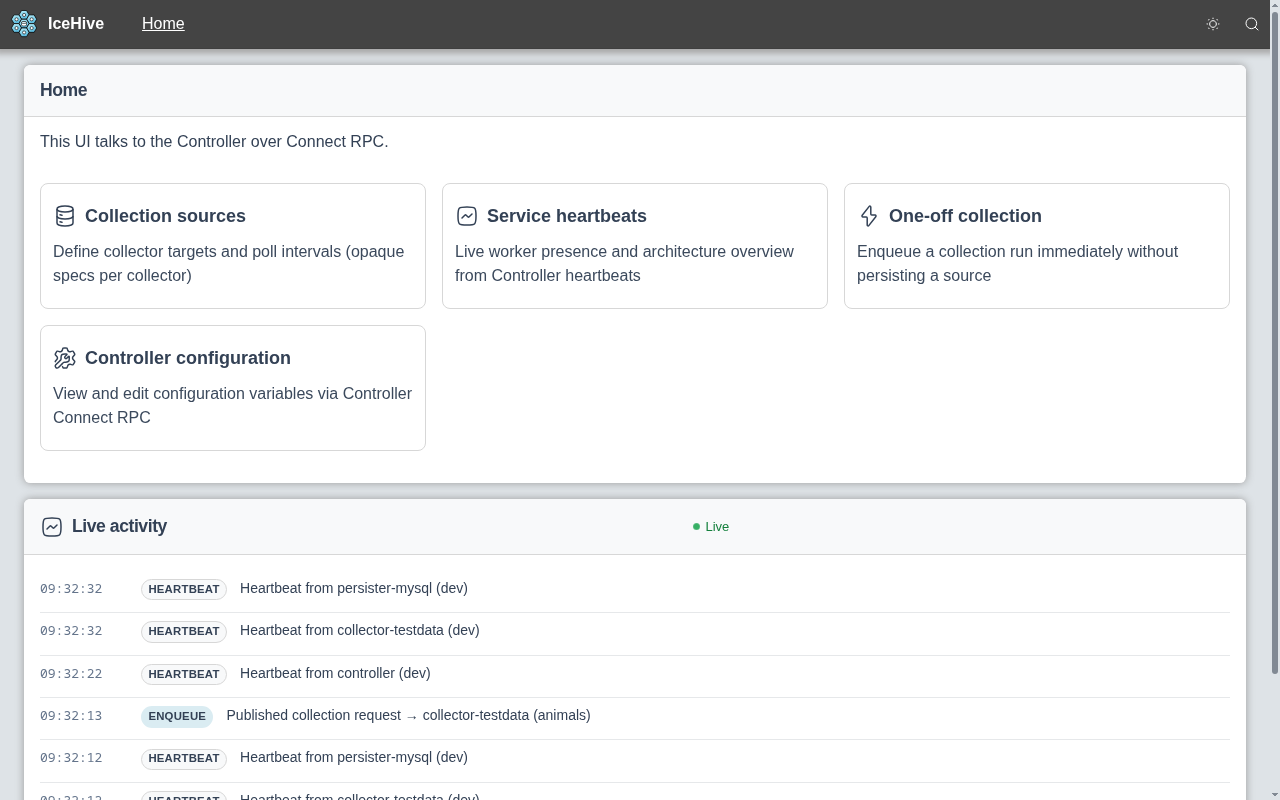
The home page links to each area and shows a live feed of control-plane activity (heartbeats, enqueued collection requests, runs).
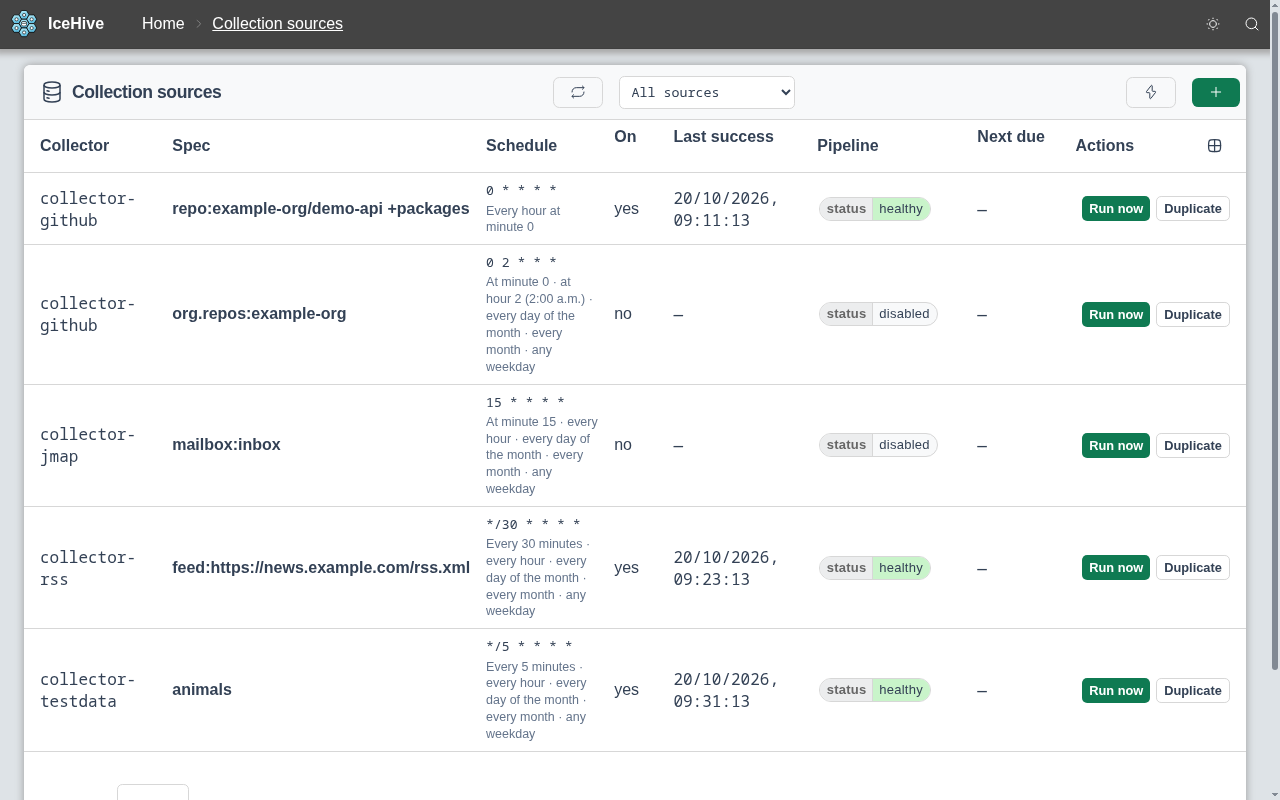
Collection sources lists every source with its schedule, last success and pipeline health. You can run a source immediately or duplicate it from here.
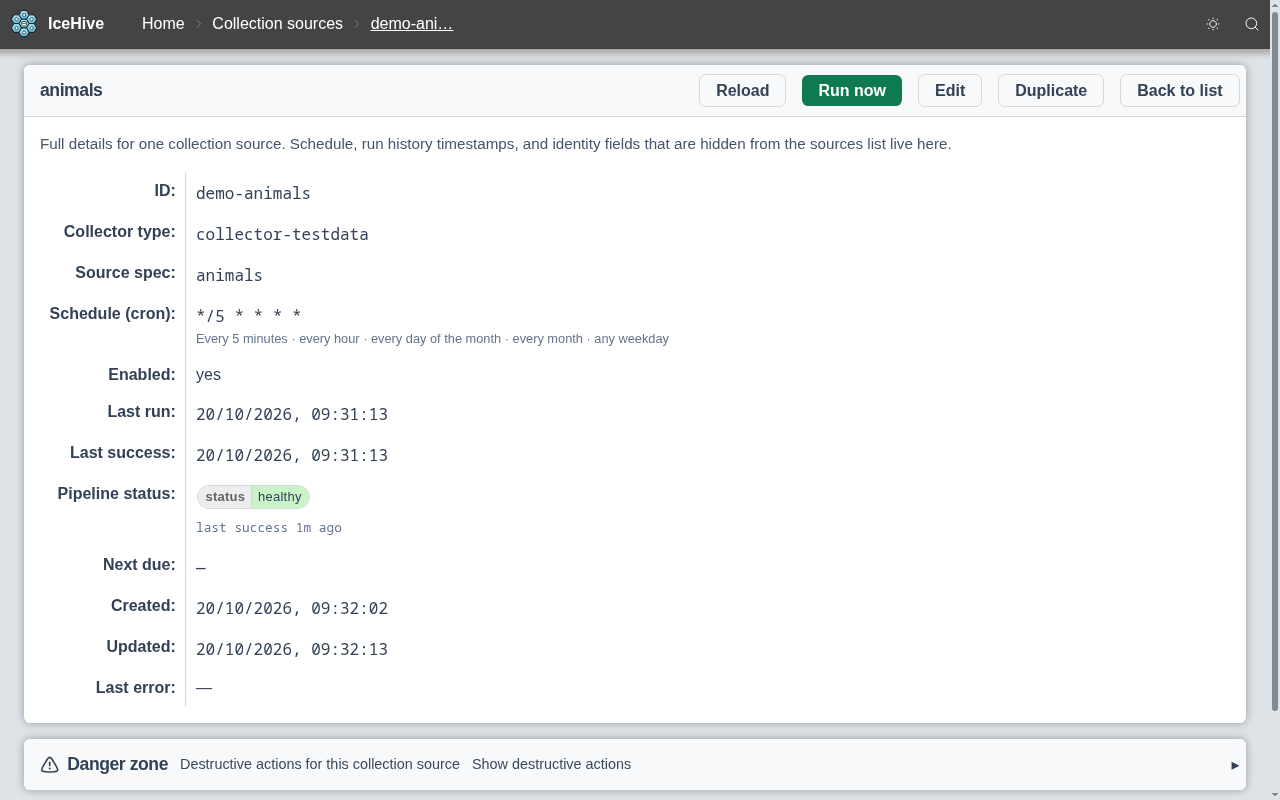
Each source has a details page with its full run history and identity fields.
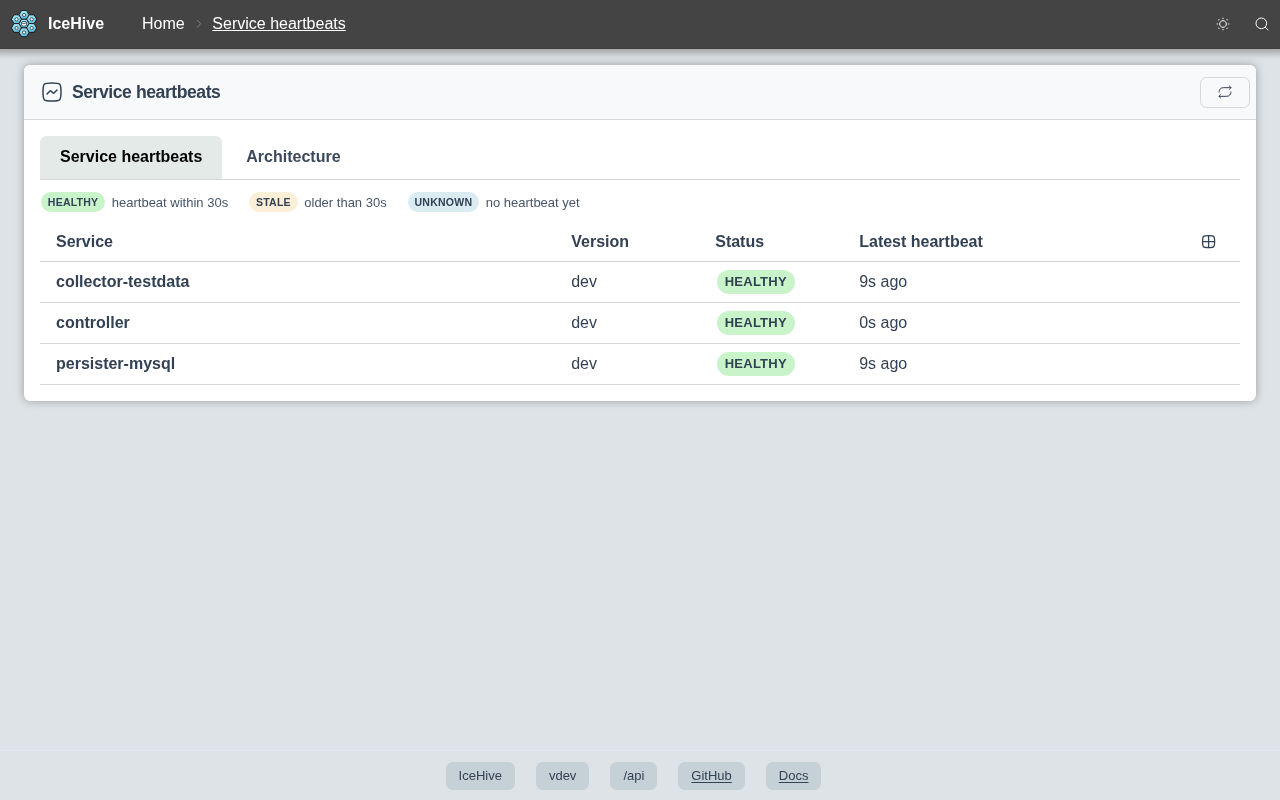
Service heartbeats shows which collectors, persisters and controllers are reporting in.
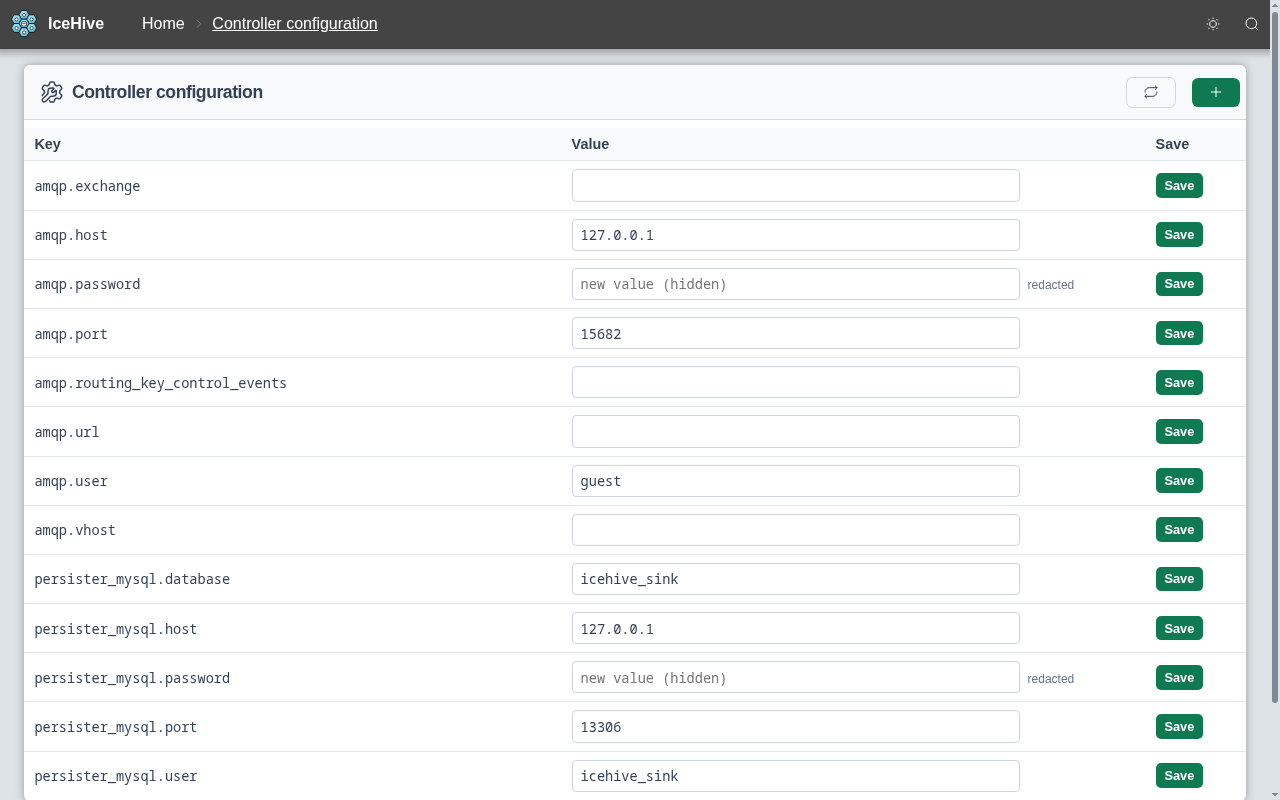
Controller configuration edits the icehive_meta config vars. Secrets are redacted.
Runtime configuration
At build time (CI docker build, npm run build, or equivalent), set:
| Build argument / env | Purpose |
|---|---|
VITE_CONTROLLER_BASE_URL |
Forces the first candidate Connect base URL (https://controller.example.com or http://internal-svc:8080). Must include scheme, omit trailing slash. |
If you omit the variable, the SPA still works: it probes common candidates (most recent saved controller URL, same-host :8080, same-origin). Successful manual connections are kept in browser local storage (newest first, up to five) and can be picked again from the controller-not-reachable screen. For predictable behaviour in production, bake the correct controller URL into the build.
Operator checklist
- Run the controller behind TLS if exposed beyond the cluster mesh.
- Ensure CORS rules on the controller allow your UI origin (the controller enables permissive CORS today—tighten in hardened environments).
- Document the controller URL in your portal so operators can paste it into the UI when switching environments.